Unlocking value at the core of the digital economy: A conversation with Michael Bogdan
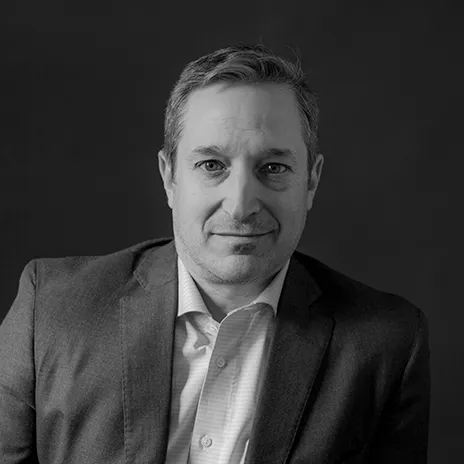
Portfolio Manager background
Michael Bogdan: In some respects, the industry chose me. In my first job out of school at Donaldson Lufkin & Jenrette (DLJ), I was handed several cable companies to cover. Twenty-five years later, I’m investing in the same ecosystem—it has evolved from telecom into what we now call digital infrastructure.
Early in my career, I moved from DLJ to the buy side and lived through the dot-com era, investing throughout the capital structure in early-stage technology and telecom businesses. We had successes, but more importantly, we saw what happens when things break. That experience stays with you. It shapes how you think about downside, structure and discipline from day one.
From there, I moved into middle market private equity at Alta Communications and then spent over a decade at Atalaya Capital Management, where we invested across credit and special situations, buying assets in the secondary market, restructuring businesses and moving up and down the capital structure depending on where the risk/reward made sense.
Several of us on the team today have worked together or across the same markets for years, including at firms like Atalaya, Lonestar, CIT, TD Bank, GE and within the broader technology, media and telecom (TMT) industry. Others came up through restructuring, credit or private equity in the same sectors. So, it’s a team that has spent decades investing in many of the same assets through several business and economic cycles.
That shared history creates a unique dynamic. We’ve seen how this market behaves when conditions change—whether it’s the dot-com unwind, the Global Financial Crisis or more recent dislocations—and we’ve built long-standing relationships with operators, management teams, advisors and other actors in the space along the way.
We ultimately decided to combine forces with Future Standard in 2025 because they understood our strategy and culture, while providing a complementary platform that accelerates our ability to scale without changing how we invest.
The opportunity set in infrastructure today
Michael Bogdan: At a high level, we define digital infrastructure as the physical foundation of the digital economy. It’s the assets that enable the creation, storage, security, movement and processing of data. That spans data centers, fiber and fixed broadband networks, towers and connectivity platforms, as well as the services and technologies that support and operate those systems.
What makes the opportunity set so compelling today is the depth and durability of the underlying demand drivers. We’re seeing sustained growth across both consumer and enterprise markets, driven by trends like artificial intelligence and machine learning, rising data consumption, continued 5G deployment, cloud adoption, the Internet of Things (think smart home devices like TVs, appliances or thermostats and wearable tech), and the shift toward more distributed and digital ways of working. These are not short-term dynamics. They are structural changes that are driving long-term capital needs across the space.
Within that environment, we focus on areas where we have deep experience and where the assets themselves have infrastructure-like characteristics. That includes middle market businesses that own or operate mission-critical physical assets whether that’s fiber networks, data centers or connectivity platforms. These are capital-intensive, long-duration businesses with recurring revenue and high barriers to entry, which we believe creates an attractive backdrop for disciplined investors.
At the same time, the ecosystem has expanded meaningfully. As the physical network has grown, so has the need for the services and technology that support it, ranging from cloud-enabled platforms to critical network and operational service providers. We view those adjacent areas as a natural extension of the opportunity set, particularly where they are closely tied to the underlying infrastructure and benefit from the same secular tailwinds.
Another important dimension of the opportunity set is the complexity and fragmentation inherent in the digital infrastructure sector. Given the capital intensity and episodic nature of these businesses, companies often require flexible capital solutions— whether that’s driven by growth initiatives, refinancing needs, liquidity constraints or inefficient sale processes. That creates opportunities for structured credit and hybrid capital, particularly where speed, customization and industry expertise matter.
So, when we think about the opportunity set today, it’s not just one segment—it’s a broad and evolving asset class, supported by long-term demand, where experience, flexibility and selectivity are key to capturing attractive risk-adjusted outcomes.
A differentiated investment approach
Michael Bogdan: Our approach is really defined by flexibility, structure and where we choose to play in the market based on our wide sourcing network.
First, we can invest up and down the capital structure—across credit and preferred structured equity—which allows us to tailor solutions to the specific needs of each company rather than forcing a one-size-fits-all approach. In practice, that means we can take senior positions with strong protections as the opportunity dictates or negotiate some form of equity participation where the risk-reward profile justifies it. That flexibility is particularly valuable in a space like digital infrastructure, where capital needs can vary widely across projects and over time.
Second, our team has been entrenched in this industry for over 25 years. We’ve built a reputation and track record demonstrating our ability to execute complex deals and build lasting partnerships with our portfolio companies. We’re deliberately not competing in the most crowded, broadly marketed deals. Instead, we look for situations that require customized capital solutions—whether that’s non-sponsored businesses, companies seeking capital for growth or opportunities sourced directly through long-standing relationships. In those cases, structure becomes a key driver of returns, allowing us to emphasize downside protection through covenants, senior positioning and asset coverage, while still capturing upside. That’s ultimately how we avoid “buying the market” and maintain discipline on pricing.
Next, we are intentionally focused on the middle market. That’s where we see the best risk-adjusted returns. Larger transactions tend to attract significant capital, which can compress returns and limit structural protections. In contrast, middle market companies—particularly non-sponsored businesses—often have fewer financing options, creating opportunities to structure investments with stronger alignment and more favorable terms. These businesses are typically fundamental, asset-backed operators, but are often underserved by traditional lenders and large-scale infrastructure capital.
Across all of this, our focus is on being a flexible partner. Many of the businesses we work with are typically not looking to give up control, but they do need capital and strategic support. Our ability to provide structured solutions—while also bringing industry knowledge, relationships and execution experience—allows us to fit into those situations in a way that is different from traditional lenders or private equity sponsors.
Data center underwriting
Michael Bogdan: It’s a fair question and one we spend a lot of time on. Underwriting data centers requires balancing the strong demand tailwinds with the structural constraints inherent to the sector.
On the demand side, fundamentals are clearly strong. We’re seeing sustained growth driven by AI workloads, cloud adoption and broader digitalization, translating into high pre-leasing activity and low vacancy. That suggests demand is both real and durable.
At the same time, there are important constraints that are getting more attention. Power availability is becoming a gating factor in many markets, while land, permitting and community considerations can impact timelines and costs. From a capital markets perspective, capital inflows are also increasingly competitive and, in some cases, compressing returns.
Our approach is to stay highly selective and focus on assets with structural advantages—access to power, desirable locations, contracted demand with high-quality counterparties or integration with broader connectivity ecosystems.
We’re also very focused on underwriting discipline. We’re not investing based on “growth for growth’s sake” or relying on expanding valuations. Instead, we look for clear demand visibility, strong contractual cash flows and capital structures that provide downside protection.
These are operating businesses, not just assets on a balance sheet, so understanding development, construction and ongoing operating risks is critical. A key differentiator in sourcing and winning deals is our ability to take a hands-on approach post-investment. We have a track record of working closely with management teams on development, capital allocation and operational execution to help manage those risks over time.
As more capital flows into the space, experience and sourcing matter even more. We try to avoid broadly marketed opportunities and focus on situations where relationships and structuring can create more favorable entry points. While we see data centers as a core part of the opportunity set, we think success increasingly comes down to disciplined selectivity.
Sourcing and origination
Michael Bogdan: Sourcing is at the core of how we generate returns, and it starts with relationships. As a team, we have spent decades building deep networks across the middle market, including investment banks, advisors, management teams and operating partners, which drive a significant portion of our opportunity set. That consistency matters. It is why counterparties come to us early and often.
But access alone is not enough. Selectivity is critical. Over time, we have built a large and active pipeline of opportunities, but we invest in only a small portion of the opportunities we evaluate. In the last eight years alone, our team has looked at over 1,000 deals representing $45 billion in value, and ultimately deployed capital in just a fraction of that pipeline.
Our edge also comes from how we work with our partners and counterparties. We pride ourselves on being responsive, transparent and capable of underwriting at speed.
Put simply, our sourcing advantage is a combination of long-standing relationships, consistent market presence and disciplined selectivity, which together provide access to differentiated opportunities we believe are positioned for attractive risk-adjusted returns.